Building Confidence on Stage: Tips for Dancers
It’s competition weekend, friends. The bags are packed, the costumes are steamed (or… being frantically steamed right now, no judgment), and somewhere between excitement and “I think I might actually be sick”… your dancer is feeling ALL the feelings.
We see it every single year, and we love it every single year. Because here’s the thing, those nerves? That’s not a problem to fix. That’s proof your dancer cares. That’s the spark. One of our favourite parts of watching dancers grow up is watching them learn how their brain and heart can work together to show up on stage.
So before they step on that stage this weekend, here’s what we want every Ark dancer (and their parents) to know about building real, lasting confidence, not just for today, but for every performance to come.
Why Confidence Matters as Much as Technique
Technique is the foundation, it gives structure, form, and discipline. It’s important. But confidence is what brings a performance to life. Audiences connect with emotion and stage presence just as much as with clean lines and precise counts. That energy, those vibes and that presence… we’ve all seen it and felt it. You KNOW when a dancer owns their stage.
Think about it this way: a technically flawless routine performed with hesitation can look stiff or incomplete. But a routine danced with boldness, expression, and joy—even if it has a small wobble—will be remembered long after the curtain closes. We are always telling our dancers that we would rather have to tell them to turn it down, than up!
Confidence allows dancers to tell a story through movement, recover from mistakes without the audience even noticing, and most importantly, actually enjoy the moment they’ve worked so hard for. Confidence isn’t about being perfect. It’s about being present. We want our dancers to come off stage and comment on how amazing they felt, over what they messed up. Confidence is often the difference here.
Preparation Is Power
Confidence isn’t built on performance day, it’s built in all the classes, run-throughs, and “one more time”s leading up to it. The reason we drill routines until they feel automatic isn’t to be boring. It’s so that when nerves show up (and they will), the body already knows exactly what to do.
Muscle memory is a dancer’s best friend on stage. When the mind gets a little panicked, the body takes over. That’s preparation doing its job. This is why we are often asking them to review things at home LONG before competition even comes, so that they can truly say, they have prepared so much for this performance.
Your dancers have put in the work. Trust it. AND – remind them. Tell them they have put in the work, they have persevered, and that will show up on stage. Those reminders that focus on their sense of determination can help them feel calmer.
Visualization & Mental Rehearsal
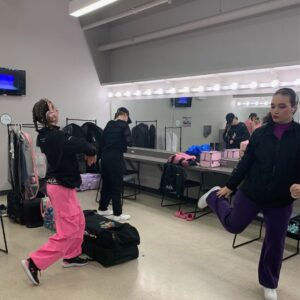 This one sounds a little “woo-woo” but we promise it works—professional athletes and Olympians swear by it. Also, its evidence based!
Before a performance, encourage your dancer to close their eyes and picture themselves on stage. The lights, the music, the audience, their movements, and most importantly, themselves performing with energy and joy. Have them picture themselves going through their routine and nailing their usual corrections and fully performing. The brain genuinely can’t fully distinguish between a vividly imagined experience and a real one. Mental rehearsal strengthens the neural pathways so the body reacts calmly when the moment arrives.
Encourage them to do this throughout the year so it becomes second nature. Even five minutes of this before bed or before they go on can make a real difference.
Positive Self-Talk… Seriously, Try It
That inner voice before a performance can be mean. “What if I forget the steps? What if everyone’s watching me?” (Spoiler: they are watching, because your dancer is awesome and they want to see them shine.) Those what ifs are super hard to hear and feel. Reframing and using positive self-talk can be life changing!
Help your dancer replace those fear-based thoughts with something better:
- “I am ready. I’ve worked hard for this.”
- “I love to dance, and this is my time to shine.”
- “Strong, calm, confident.”
- “I belong on this stage.”
A simple mantra repeated backstage can be the difference between freezing and flying. Write it on a sticky note in the costume bag. Say it in the car. Make it a thing and it might stick with them for life! Make it relevant to them, and help them remember to use it, in and outside the dance studio.
Turning Nerves Into Energy
Here’s our favourite reframe: instead of “I’m nervous,” try “I’m excited.” Same feeling. Completely different direction.
Adrenaline is actually your dancer’s secret weapon, it boosts energy and sharpens focus. The trick is channeling it instead of fighting it. A few things that help: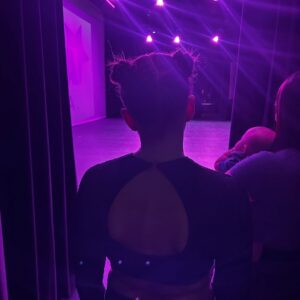
- Breathing: Inhale for four counts, hold for four, exhale for four. Repeat. It genuinely works. OR do big sighs which an exhale you can hear and feel
- Physical release: Shake out the arms and legs, do a few jumping jacks, roll the shoulders. Get the extra tension out of the body. Literally, shake the sillies out hehe
- Power pose it: Stand tall, chin up, big smile, even backstage. The body tells your brain how to feel, not the other way around.
- Dance BIGGER: Use that adrenaline to go fuller, brighter, and bolder once they’re on stage. That energy reads beautifully from the audience.
Nerves aren’t the enemy. They’re part of the experience, and honestly, part of what makes performing so addictive.
A Note for the Dance Parents
You have more power here than you might think, and it has nothing to do with anything you do and everything to do with your energy. We say this all the time, your job as their parent is lots of things… like cheerleader, makeup artist, motivator, hair stylist, Uber driver, hug machine etc. But there is 1 thing that is NOT your job (because you pay us to do it!), and thats being their dance teacher.
A calm, steady parent through competition weekend is worth its weight in gold. Here’s how to be that person even when you’re nervous for them, because we know its scary to have your heart up on that stage:
- Focus on effort, not outcome. “I’m so proud of how hard you’ve worked” lands way better than any score will.
- Swap “don’t be nervous” for “it’s okay to feel nervous.” Telling them not to feel something just makes them feel worse for feeling it. Normalize it instead.
- Cheer for the joy of it. “I loved watching you smile out there”, “That looked so fun” is more powerful than a perfect score. Way more.
- Model the calm. They are watching you. When you’re steady and positive, they feel it.
You don’t have to fix the nerves. You just have to be their person. That’s enough.
Go Get ‘Em, Ark Dancers
Every single dancer stepping on stage this weekend has earned their place there. The work is done. Now it’s time to go share it.
We’ll be cheering you on every single moment, nervous energy and all.